Hotel Booking

Tuesday, March 10, 2009

Unusual and Spectacular Castles

Unusual and Spectacular Castles

Castles That Will Inspire and Haunt You

Arguably born the day that villagers -- and the people who profited off them -- decided that wood wasn’t strong enough to keep them safe, castles quickly became more than just edifices dedicated to security. Instead of repelling borders, real or imaginary, castles became THE status symbol of status symbols. Monuments to bravado, they were stone and mortal proclamations to the age-old idea that "mine is bigger than yours."

Unusual and Spectacular Castles

Pierrefonds - picture-postcard example of a castle
If you want an picture-postcard example of a castle, you don’t have to go anywhere but the Château de Pierrefonds in France. Although it may have started out as a structure designed to keep some folks out and others safely in, it was later partially sugar frosted by none other than Napoleon the 3rd, who was shooting for a true nobility status symbol: a iced cake that no one but the very rich and very privileged could eat.
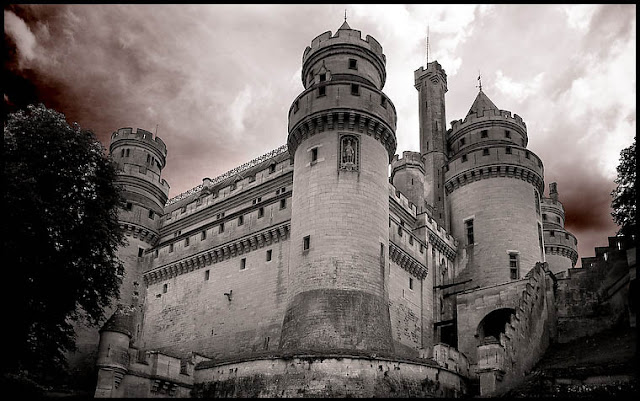
(image credit: Frédéric Lavaux)
Pierrefonds is still a beautiful place, even if its fortifications were overly gilded –- or maybe because of it. It’s no wonder it's used to this day when central casting gets a call for a classic castle.
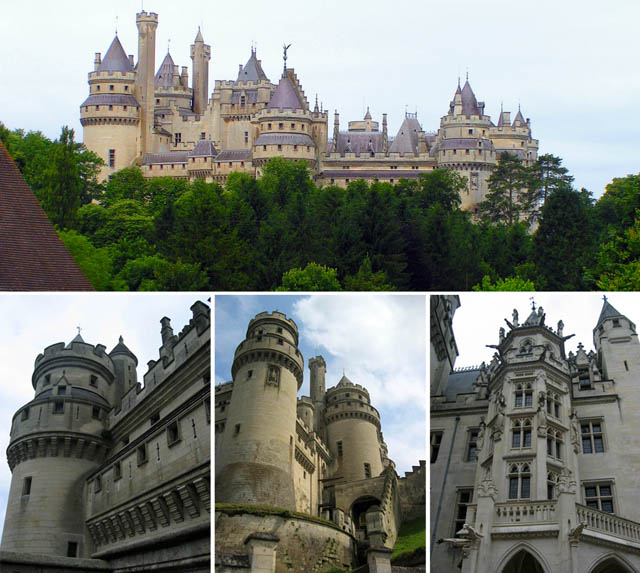
(photos by Ralph Gant and Benoit Stordeur, see more)
When fairy tale jumps from a landscape and hits you between the eyes
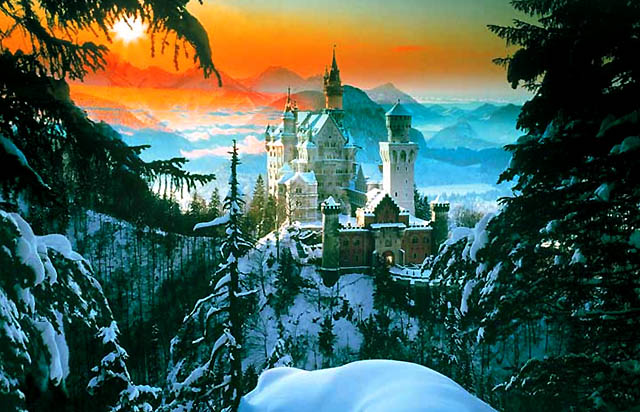
If you want a real Disney, fairy-tale, and totally insane castle, you have to visit the residence of one totally insane German king, namely Ludwig II of Bavaria. Look up gaudy in the dictionary and there’s a picture of his castle: Neuschwanstein ("The New Swan Rock").
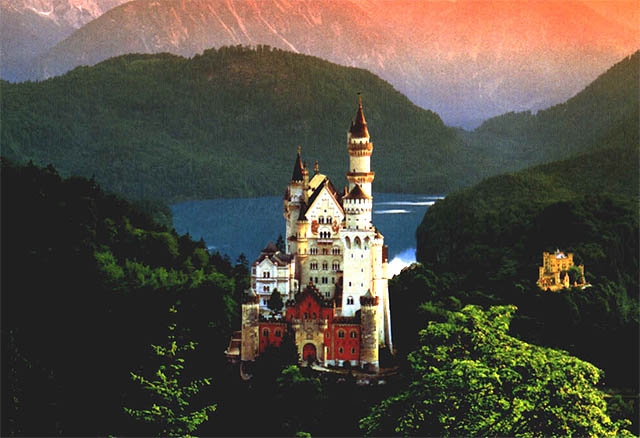

Neuschwanstein Castle, gracing ten million over-saturated postcards and jigsaw puzzles, (image credits unknown)
Glitzed and filigreed, Neuschwanstein is like Ludwig’s twisted brain turned inside out and realized in stone and brick. It is also sublime and splendid, over-the-top and strangely fragile - all at the same time. We are going to devote a special article to it, truly a place not of this world.
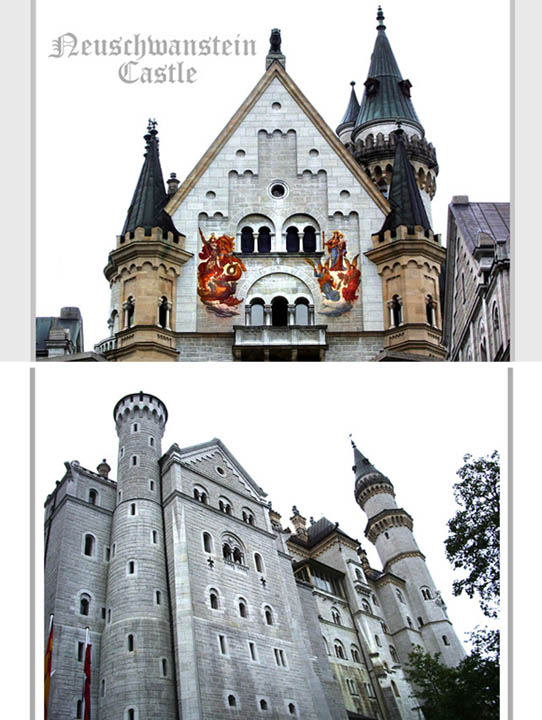
photos by Avi Abrams
Monstrous chandelier? Check. Room made to look like a cavern? It’s there. Entire rooms dedicated to Wagner (with whom Ludwig was obsessed)? Absolutely. It’s all there, larger and more ornate than any life … unless, of course, you were the King of Bavaria.
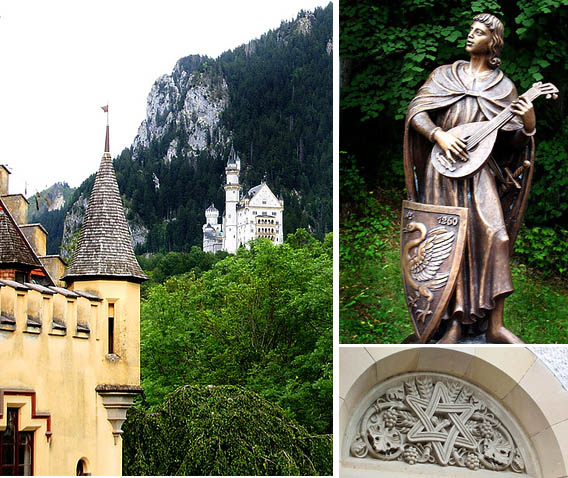
photos by Avi Abrams
The Coral Castle - Nobody knows how it was built
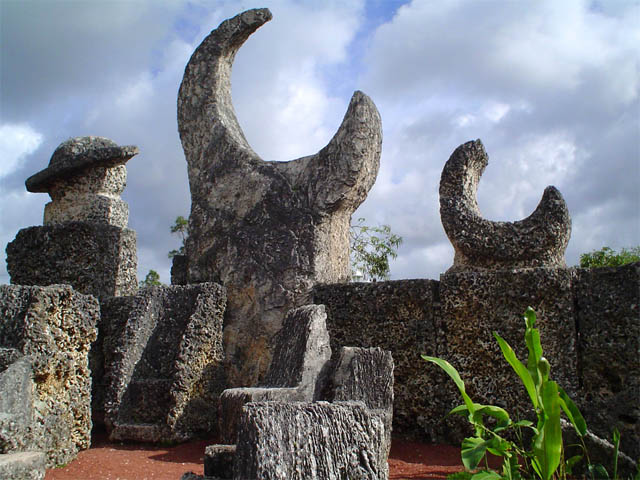
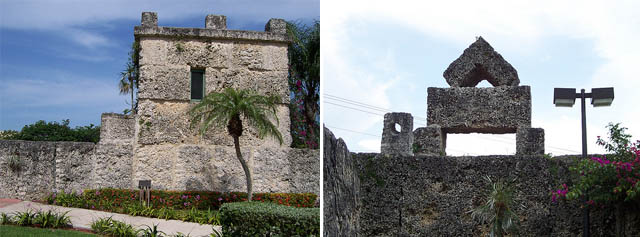
One of my favorite castles, though, wasn’t the dream of a king realized in stone and mortar. Spurned at the altar back in his native Latvia, Edward Leedskalnin took his disappointment, and a case of tuberculosis, to Florida in 1923. There, in the land of oranges and sunshine, Leedskalnin began to build his very own castle, one he worked on until his death in 1951 (more info)
(image credit: sarahmizoo)
(images credit: Jim)
It’s still there and definitely worth seeing. It might not have the polish of Pierrefonds or the glimmer of Neuschwanstein, but Rock Gate Park, as he called it, is still a striking sight: monstrous slabs of coral skillfully balanced and beautifully positioned, all of them assembled without reinforcement or mortar. He spent over 28 years building the Coral Castle, refusing to allow anyone to view while he worked.

(The Throne Room, supposed to depict the Moon and the planets - photo by Claudia Domenig)
Leedskalnin’s construction genius is legendary. No one quite understands how he built his castle and then moved it ten miles away in 1936. Some people think he used a kind of perpetual motion machine or mystical methods to move his several-ton blocks. Whatever the means, his Coral Castle, is still a magnificent achievement -– the sublime result of his own two hands, his incredible inventiveness, and a tragically broken heart.
Portmeirion: a surreal village in Gwynedd, Wales
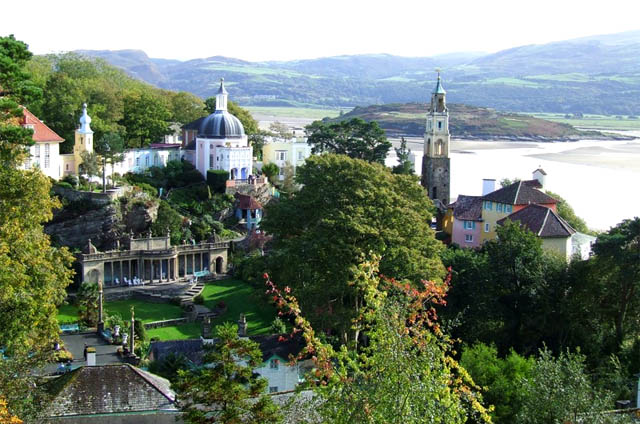
Stepping away from literal castles, but staying within the theme of very special men and the homes they created, one of the most beautiful is one you might not know the name of but one you’d recognize immediately. All I need to write is "You are Number 6."
(image credit: Richard Hagen)
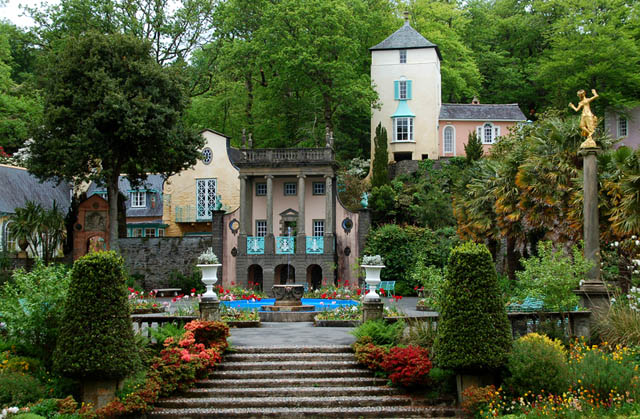
Located in Wales, Portmeirion was created by Sir Clough Williams-Ellis in 1925 (though some of it wasn’t finished until 1975). Although Sir Williams-Ellis wasn’t a king, he was obviously knighted, and certainly had help with his remarkable residence. Portmeirion deserves to stand with Ludwig’s vision of Germanic paradise and Leedskalnin’s eccentric coral castle because of its unique, and spectacularly beautiful, vision.
(image credit: Gavin D. J. Harper)
Williams-Ellis was so dedicated to preserving the tranquil elegance of Portmeirion that the filming location of Patrick McGoohan’s "The Prisoner" wasn’t revealed until the final episode of the series. Even with the careful hiding of the village’s identity, anyone who knew anything about architecture would have recognized the Williams-Ellis’s pearl-white cottages and the legendary green dome where, in "The Prisoner", the village’s rotating Number 2s had their office.
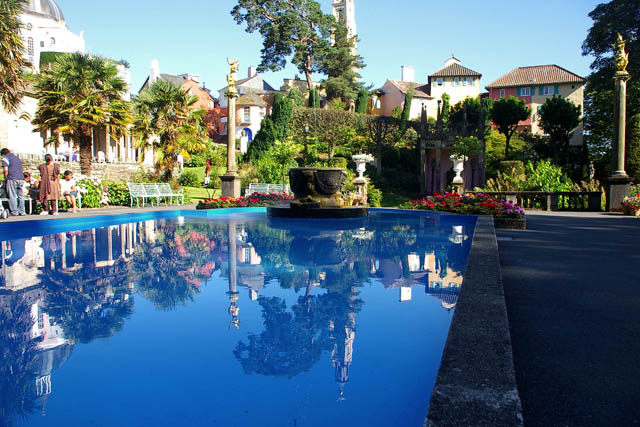
(image credit: Matt Buck)
Portmeirion is truly a beautiful place and completely unspoiled by its television appearance. It remains today just as Williams-Ellis intended it to be: a tranquil village with a tasteful dusting of nostalgia.
The Postman's Palace - another single-handedly built castle
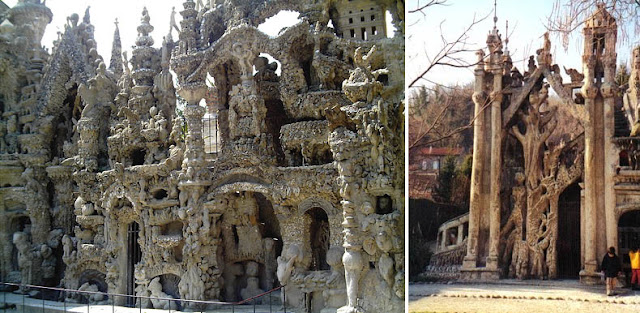
Ferdinand Cheval has imagined his "Ideal Palace" and simply went on to built it - after all, why not? He spent 33 years with this project (located in the village of Hauterives in the picturesque Drôme region of Southern France) - but the results are nothing less than stunning:
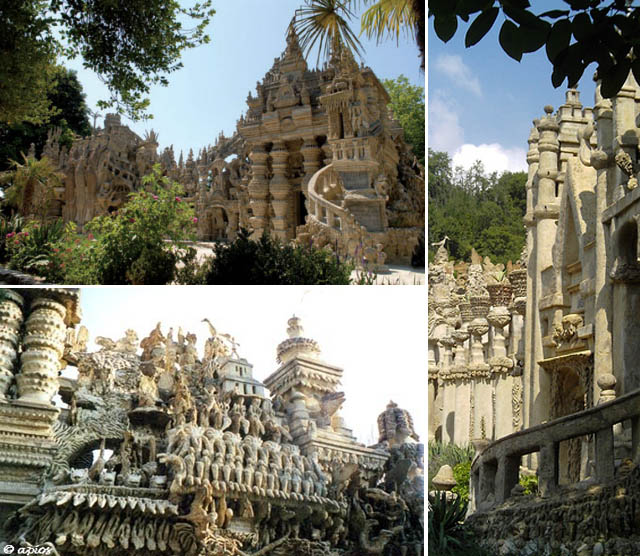

(photos by Emmanuel Georges, Eric Devlies, Francerama)
Initially considered "the village idiot", he was suddenly hailed as a genius and a celebrity in France, upon completion of this intricate affair. But is it the "Ideal Palace"? Everyone seems to have a different opinion. More info and images are on this page.
Whether it's the gussied-up fortresses like Pierrefonds, the gilded dreams of a mad king like Neuschwanstein, the eccentric genius of Leedskalnin and his Coral Castle, or the whimsical grace of Williams-Ellis’s Portmeirion and Ferdinand Cheval's Palace, a man’s home can really be his castle.
More Fantastic Castles, to Visit and to Think About (Wistfully)
Eltz Castle, Germany: another fairy-tale location, this time completely surrounded (and in certain degree concealed) by the forest:

(image credit: frizztext, see more)
Germany (just like Switzerland and Austria) has many enchanting castles, big and small -
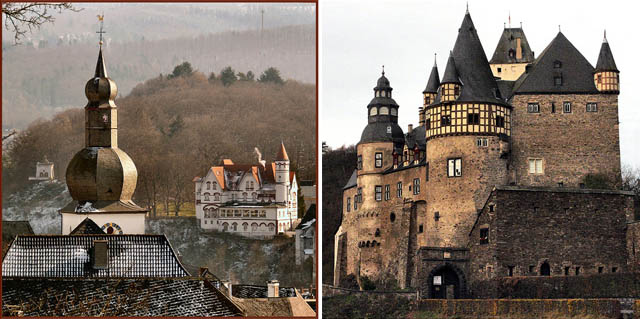
Castle-like mansion in Arnsberg and a large Buerresheim Castle, photos by frizztext
The stretch of Rhein between Cologne and Mainz has the especially high concentration of great fortresses, presiding over the quaint riverside villages:
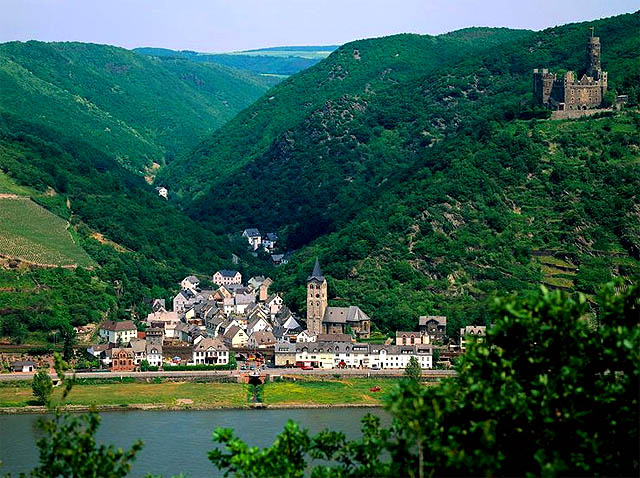
This is a great site listing all the castles
Egeskov Castle, Denmark:

(image credit: Malene Thyssen)
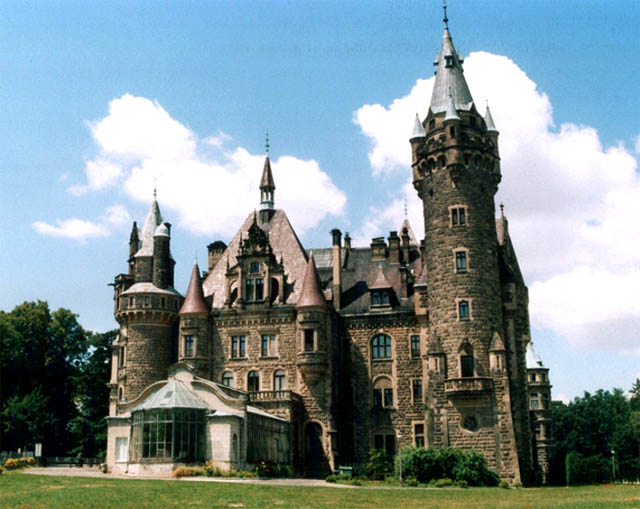
Eastern Europe abounds in awesome castles. This is for example, Castle in Moszna, Poland:
Check out the sinister door handle from the Dracula's Bran Castle on the bottom right. Towers emerging from the mist in the photo below: this is Bragança, a walled town in northern Portugal. Very evocative image on the bottom left is Le Chateau de Nyon in Nyon, Switzerland:
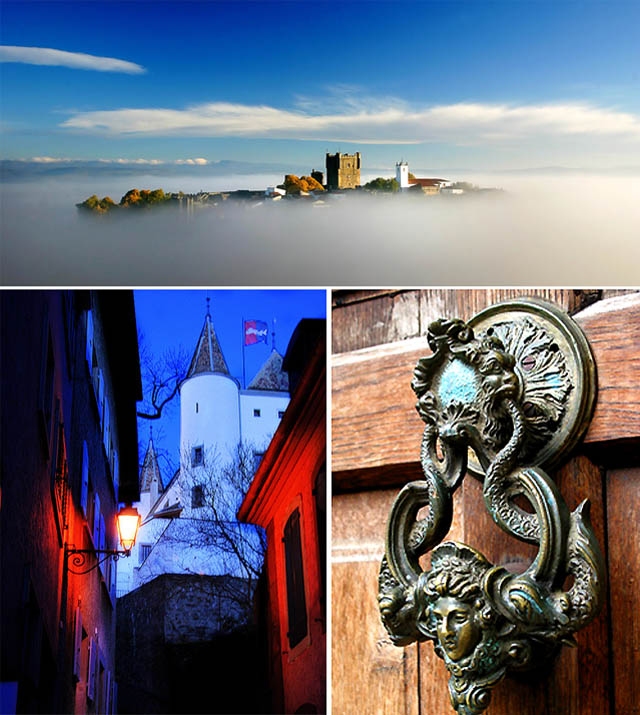
(originals unknown)
The Chittorgarh Fort in India. This pool was often the only source of water during the numerous sieges by Mughal Emperors:
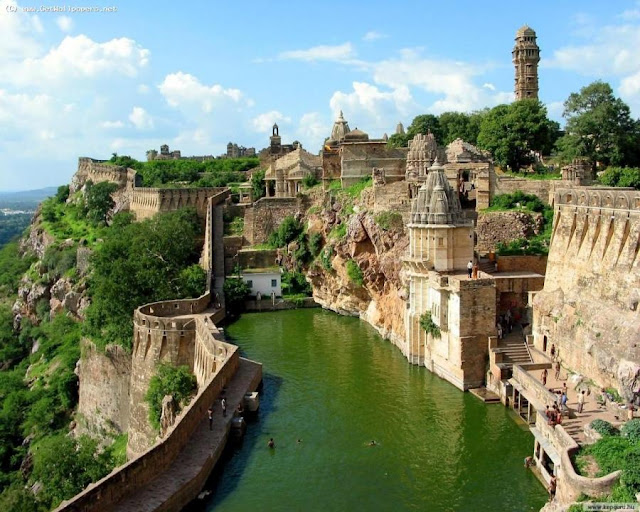
(image via)
Nestled in High Places:
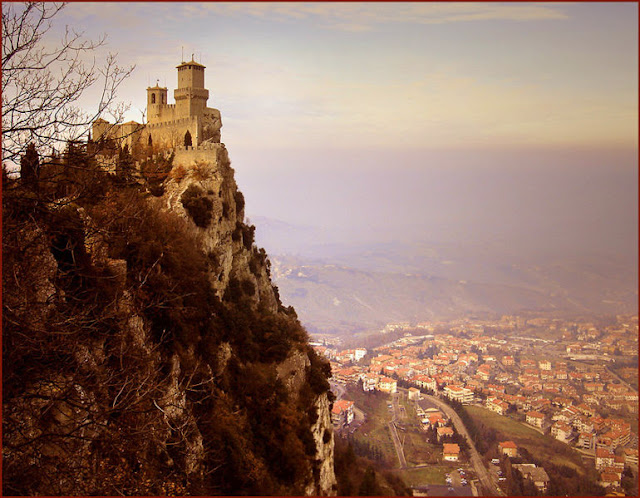
The way to the Guaita Fortress in San Marino (more info) -
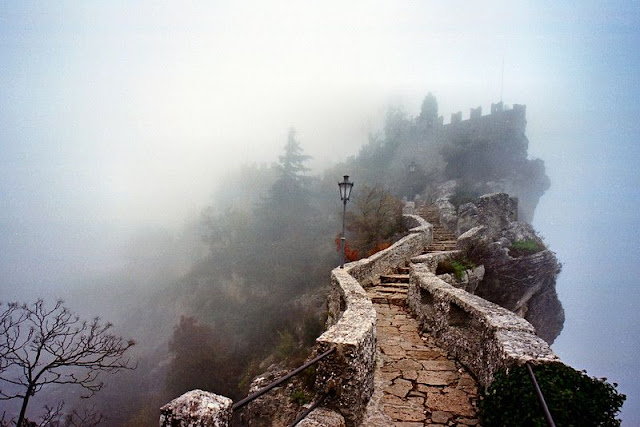
Try not to think of "Myst" and "Riven" while looking at the above picture... Here is the high cliff on which the fortress stands:
(image credit: Ricardo André Frantz)
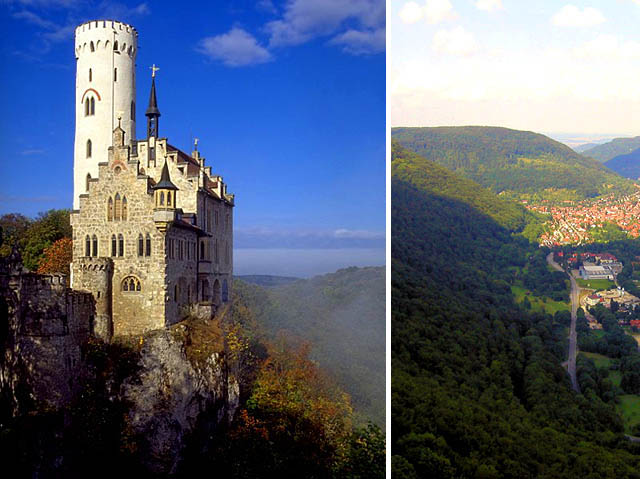
Overlooking the Echaz Valley and the storybook village below, often shrouded in fog, Lichtenstein Castle comes close to being the perfect castle in Europe.
(image credit: Andreas Tille)
The Abandoned Castle in Rural Italy
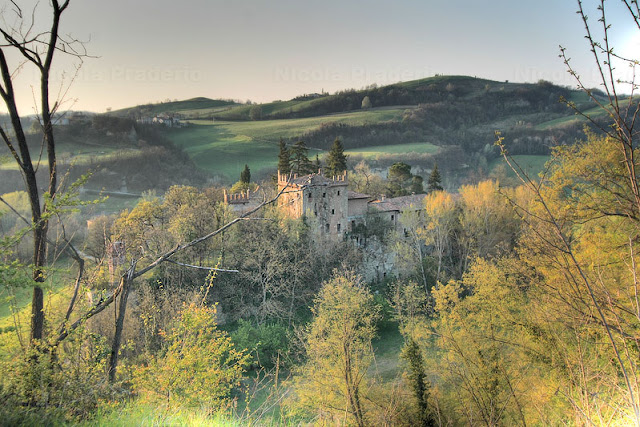
Oh yes, still unclaimed by some luxury developer, nor touched by multi-million renovation... hiding in a valley in a tangled forest: Castello di Zena:
(here is a Google Earth location, but don't set your hopes too high - this is a guarded private property)
(image credit: cyberbiscottato)
A mystery. Falling to pieces. Splendor in the grass.
A View That Launched 10,000 Epic Fantasy Books
Another feature of fortified high places is the splendid view they often afford. We'd like to open up a sort of competition: The Best View From a Castle, but the winner already easily comes to mind - and it's the Neuschwanstein's Castle, again. The panorama of the towering Alps and a nestled gem of the lake, Alpsee, is enough to make you sigh and close your eyes... dreaming.
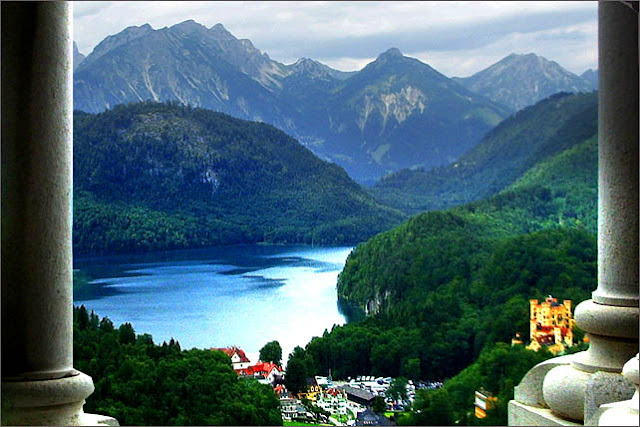
Photo by Avi Abrams
The ultimate castle, that was ever designed to grace the face of the Earth
King Ludwig, again. The planned Falkenstein - truly THE Lost Castle. The one that he was all set to build - but for the financial (and mental) meltdown he suffered.
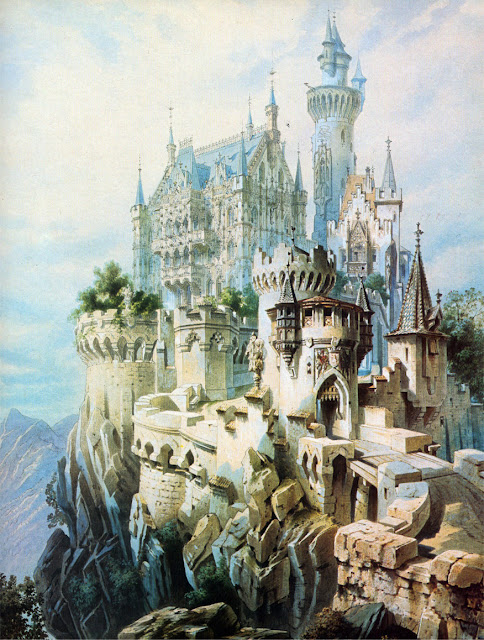
Christian Jank's first High Gothic design for Falkenstein, 1883.

Friday, February 27, 2009

Rajasthan India Tourism Mount Abu

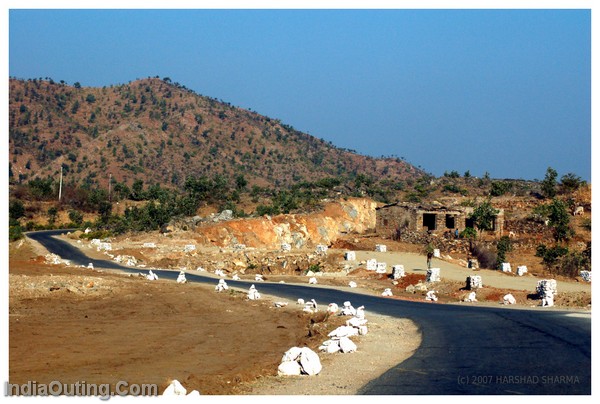
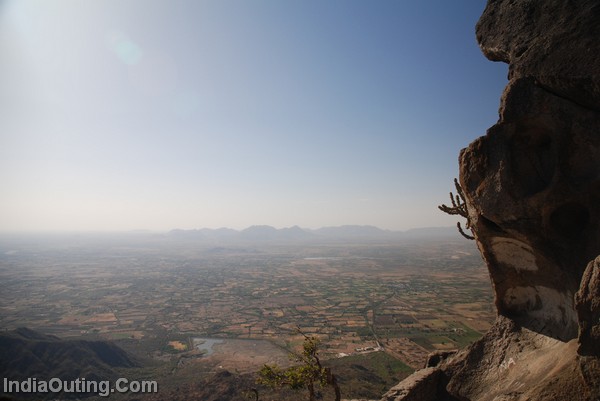
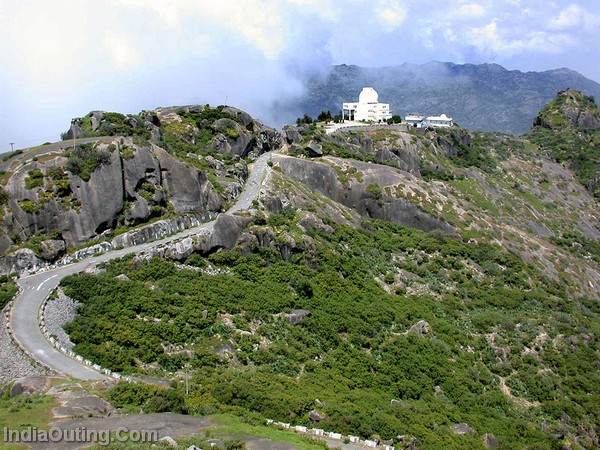
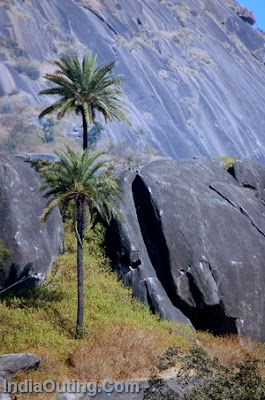
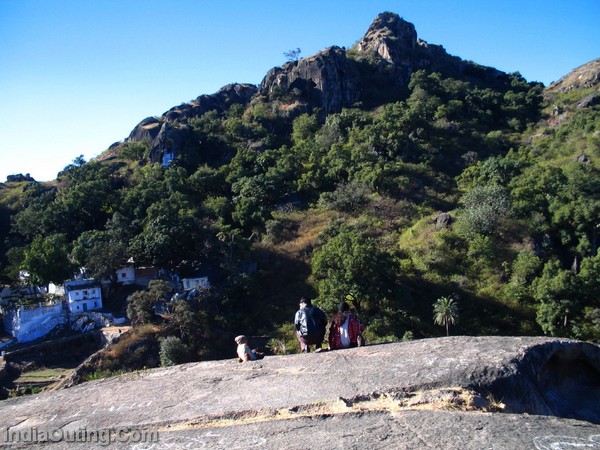
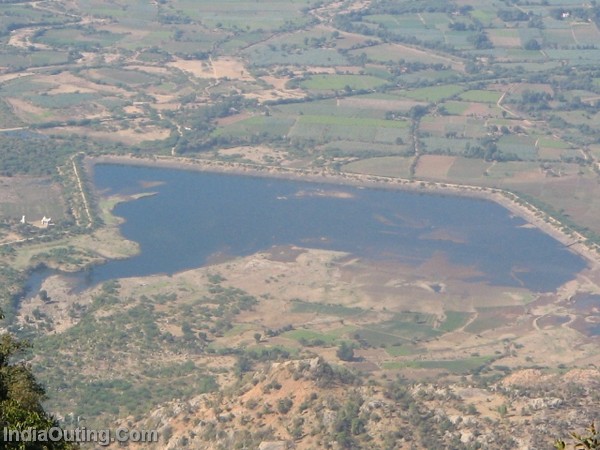
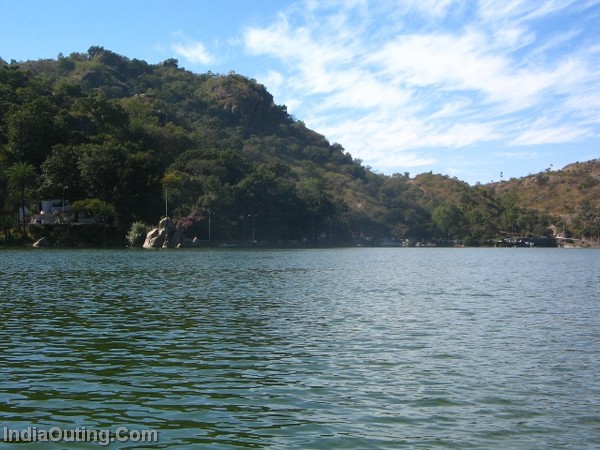
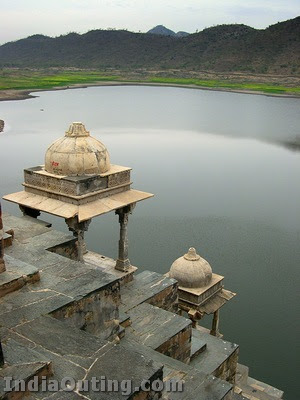
Mount Abu is the highest peak in the Aravalli Range of Rajasthan state in western India. It is located in Sirohi district.Mount Abu is 58 Km from Palanpur(Gujarat). The mountain forms a distinct rocky plateau 22km long by 9 km wide. The highest peak on the mountain is Guru Shikhar, at 1722 meters above sea level. It is referred to as ‘an oasis in the desert’, as its heights are home to rivers, lakes, waterfalls and evergreen forests.

MountAbu

MountAbu

MountAbu

History

In the Puranas, the region has been referred to as Arbudaranya, (”forest of Arbhu“) and ‘Abu’ is a dimunitive of this ancient name. It is believed that sage Vasishtha retired to the southern spur at Mount Abu following his differences with sage Vishvamitra.

MountAbu

MountAbu

MountAbu

Get in

Mount Abu is a part of Sirohi district of Rajasthan. The nearest railhead is Abu Road, about 25 kms away, in the lowlands. Abu Road is on the railway line from Ahmedabad to Marwar Junction (onwards to Jaipur and Delhi or Jodhpur).

At Abu Road, car-taxis and cabs are available as well as state transport and private buses to take you to Mt Abu.

MountAbu MountAbu

MountAbu

MountAbu

See
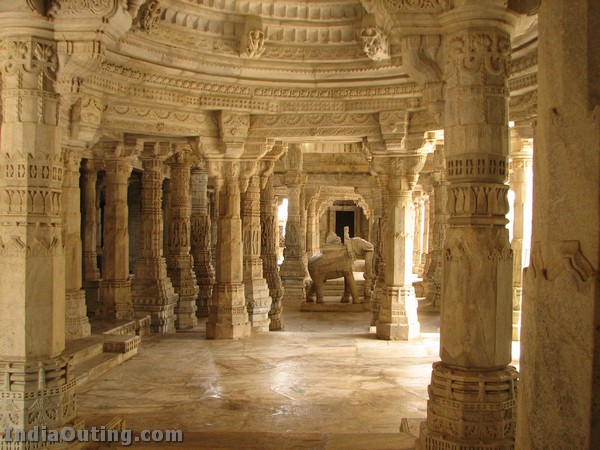
  • Dilwara Temples Beautiful Jain temples, carved of white marble, built between the 11th and 13th centuries AD.
  • Toadrock
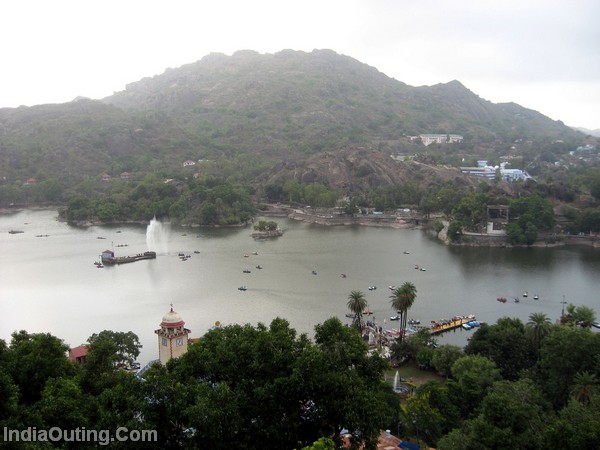
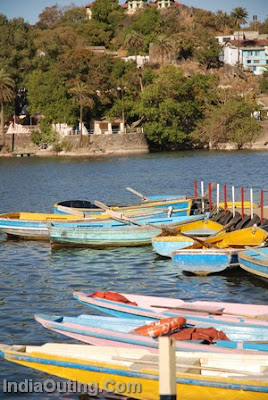
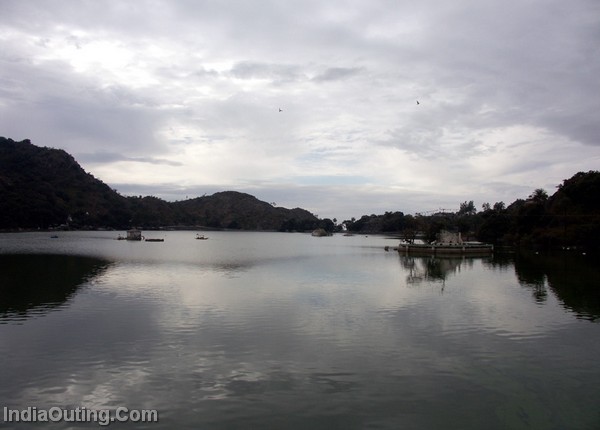
  • Nakki Lake
  • Sunset Point
  • Brahma Kumari’s Universal Peace Hall And University
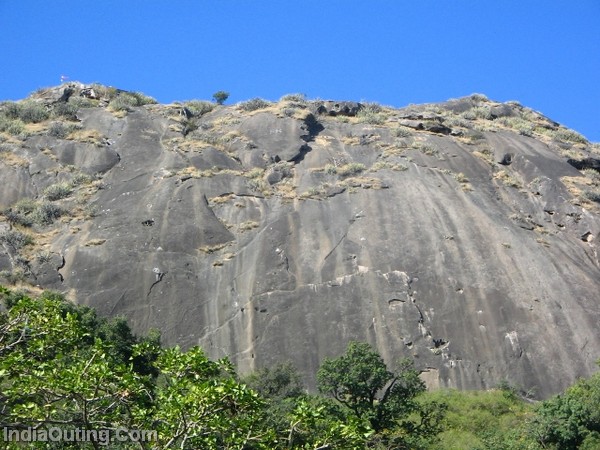
  • Guru Shikhar At 1722 meters above sea level, this is the highest peak of the Aravali range
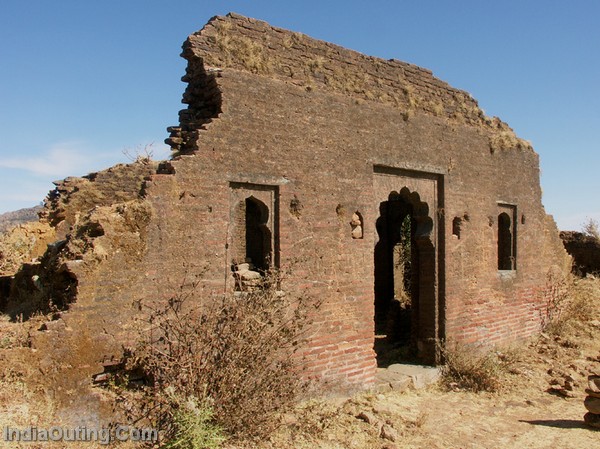
  • Achalgarh A short distance away, a fort built in the 14th century by Rana Kumbha of Mewar. Also houses Jain temples, Achaleswar Mahadev Temple (1412AD) and the Kantinath Temple (1513AD)
  • Adhar Devi Temple
  • Shri Raghunathji Temple
  • Peace Park

MountAbu

MountAbu

MountAbu

Do

There is nothing specific to buy, As a Tourist Place, people use to buy Clothes and Others Household range of Products, which are brought from big cities like Ahmedabad, Baroda and Other big cities of Rajasthan.

MountAbu

MountAbu

MountAbu

Tuesday, February 24, 2009

Rajasthan India Tourism Udaipur

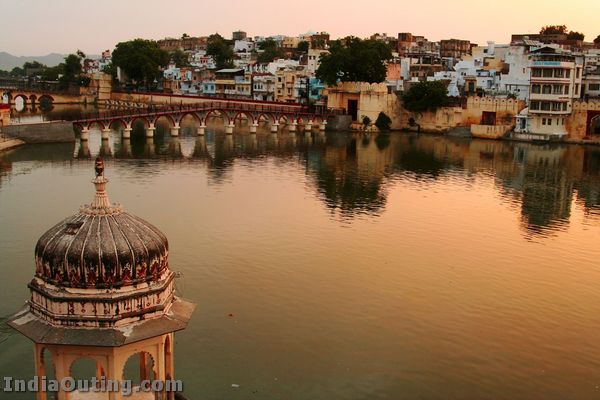
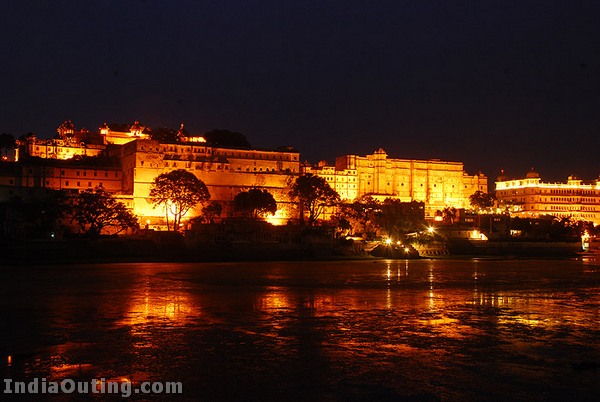
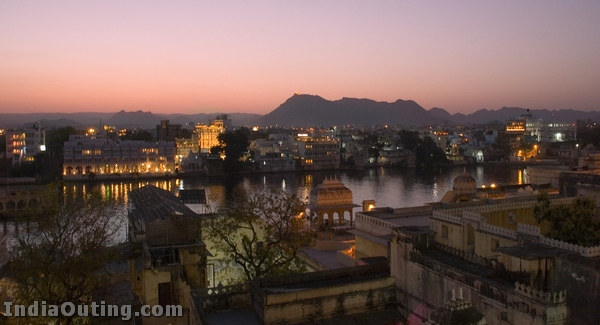
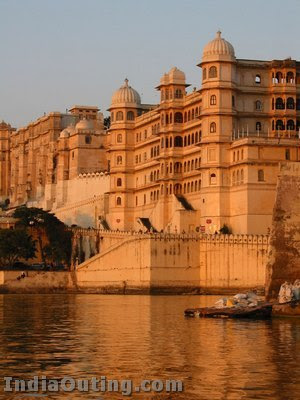
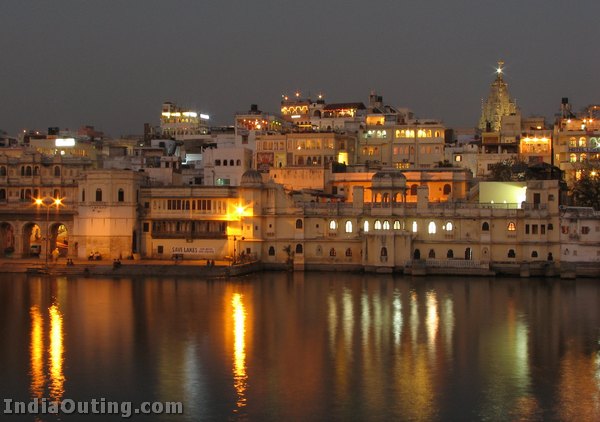
Udaipur pronunciation (उदयपुर) is a city and a municipal council in Udaipur district in the Indian state of Rajasthan. It is the historic capital of the former kingdom of Mewar, and the administrative headquarters of Udaipur District. It is also known as the City of Lakes. The Pichola lake, Fateh Sagar Lake, Udai Sagar and Swaroop Sagar in this city are considered some of the most beautiful lakes in the state.

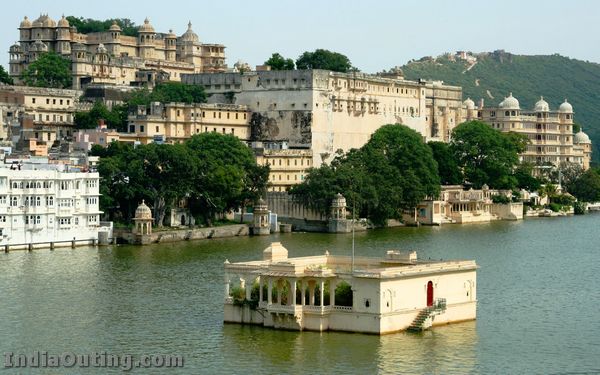
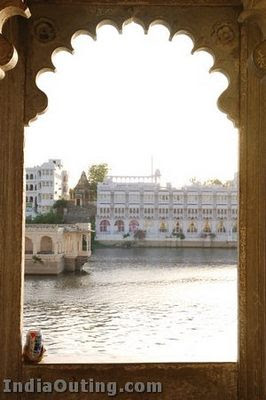
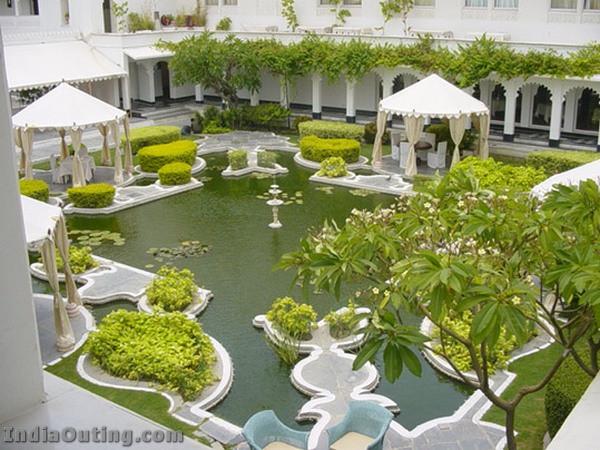
It is known for its Rajput-era palaces. Particularly famous is the Lake Palace, which covers an entire island in the Pichola Lake. Many of the palaces have been converted into luxury hotels.

Udaipur

Udaipur

History

Udaipur was the capital of the Rajput kingdom of Mewar, ruled by Ranawats of the Sisodia clan. The founder of Udaipur was Rana Udai Singh. The ancient capital of Mewar was Chittor or Chittorgarh, located on the Banas River northeast of Udaipur. Legend has it that Maharana Udai Singh came upon a hermit while hunting in the foothills of the Aravalli Range. The hermit blessed the king and asked him to build a palace on the spot and it would be well protected. Udai Singh established a residence there. In 1568 the Mughal emperor Akbar captured Chittor, and Udai Singh moved the capital to the site of his residence, which became the city of Udaipur.

Udaipur

Udaipur

Getting In

Udaipur is well connected to the world through land, rail and air.

Road : The city falls on the Golden Quadrilateral, lying midway between Delhi and Mumbai on National Highway (NH) 8; it is around 650 kilometres from either metro. The roads in this part of the country are paved and fit for private vehicles. One can either drive from Jaipur (around 6 hours) or Ahmedabad (3.5 hours), or take a Rajasthan Tourism bus from India Gate in Delhi. It also falls on East West Corridor which starts from Porbandar and ends at Silchar and is intersecting the Golden Quadrilateral and shares the common space from Udaipur to Chittor.

Air : Dabok airport, also known as Maharana Pratap Airport, is 24 kilometres from the city centre. Daily Indian Airlines flights connect Udaipur with Jodhpur, Jaipur, Aurangabad, Mumbai & Delhi. There are daily flights from Delhi, Mumbai and Jaipur on Jet Airways, Indian Airlines and Kingfisher Airlines. The airport is going through modernisation project and will soon have a new terminal building with an additional 4 stands. The airport has been confirmed as an International airport by the Government of India.

Train : Train connectivity is established between Delhi, Jaipur and Ahmedabad through trains run by Indian Railway. Recently Udaipur got connected with Delhi, Kota and Mathura with the “Mewar Express” on broadgauge tracks. In August 2007 Udaipur was connected with Kolkatta, by the “Ananya Express”. A train has also been introduced between Mumbai and Udaipur via Vadodara, Ratlam and Chittorgarh. Udaipur lacks direct connectivity to South India, and one has to reach it either via Kota or Ahmedabad.

Local transport : Unmetered taxis, auto rickshaws, tongas, city bus, and regular city bus service is available for Udaipur City main roads to Dabok Airport, Badi Lake, and Bedala.

Udaipur

Udaipur Udaipur

Places of interest

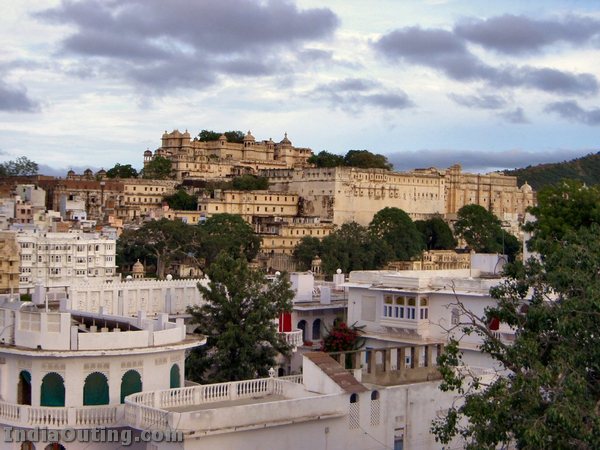
City Palace Udaipur

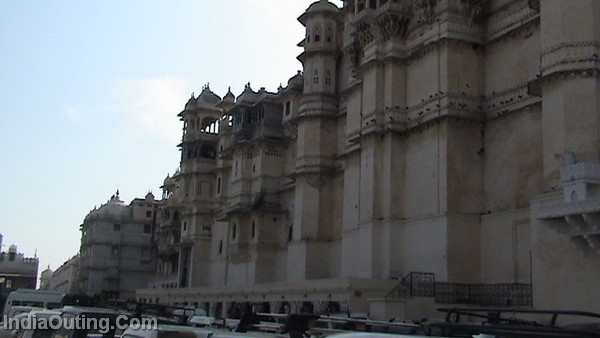
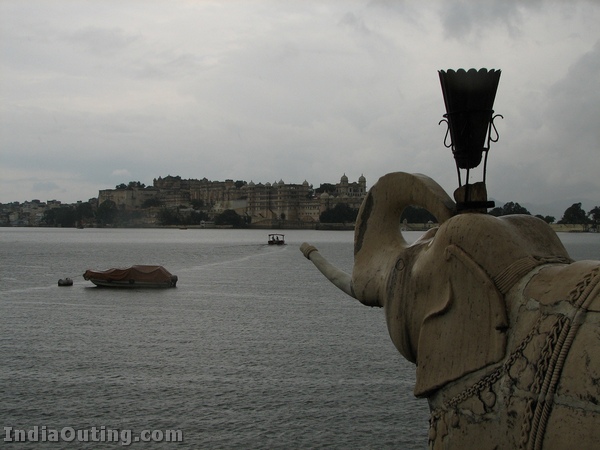
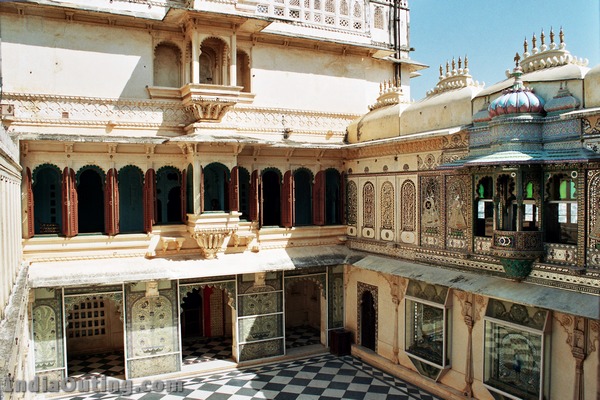
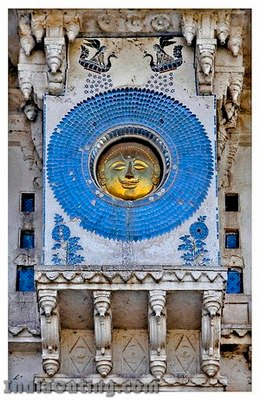
Standing on the east bank of Lake Pichola is a massive series of palaces built at different times from 1559. The balconies of the palace provide panoramic views of “Jag Niwas” (the Lake Palace Hotel), Jag Mandir on one side and on the other the city of Udaipur. Its main entrance is through the triple-arched gate - the Tripolia, built in 1725. The way now leads to a series of courtyards, overlapping parations, terraces, corridors and gardens. There is a Suraj Gokhda, where the maharanas of Mewar presented themselves in the times of trouble to the people to restore confidence. The Mor-chowk (Peacock courtyard), gets its name from the mosaics in glass decorating its walls. The chini chitrashala is noteworthy while a series of wall paintings of Krishna are on display in Bhim Vilas. There are numerous other palaces such as Dilkhush mahal, Sheesh mahal, Moti mahal and Krishna vilas - in memory of a princess of striking beauty who poisoned herself to avert a bloody battle for her hand by rival princes. Now the palace contains many antique articles, paintings, decorative furniture and utensils and attracts thousands of visitors every day. The former guesthouse of the city palace, Shiv Niwas and the Fateh Prakash Palace have been converted into heritage hotels.

Udaipur

Udaipur

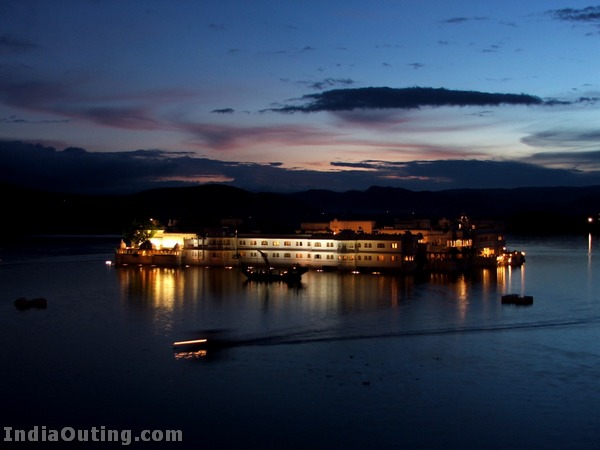
Lake Palace

Originally known as the Jag Niwas, took three years to build and was inaugurated in 1746. Nothing but marble is used in the composition of this palace. Lake Palace is now a luxury hotel owned by Taj Group of Hotels.

Udaipur Udaipur

Udaipur

Jag Mandir

Another island in the Lake Pichola, which is known for its garden courtyard. Shah Jahan took refuge here while revolting against his father.

Udaipur

Udaipur

City Palace and Museum

Pratap Museum, While entering the City palace the straight way go to the Government Pratap Museum housed with old sculptures and inscriptions. The antique paintings of Mewar, the turban of prince Khurram later on called Shah Jahan, who built the world famous Taj Mahal has also been displayed here as a token of friendship of Maharana Khazan Singh. Next to Fateh Prakash Palace, houses glass and mirror works.

Bharatiya Lok Kala Mandal

A museum of folk arts. Also hosts puppet shows in its auditorium.

Udaipur

Maharana Pratap Memorial or Moti Magri

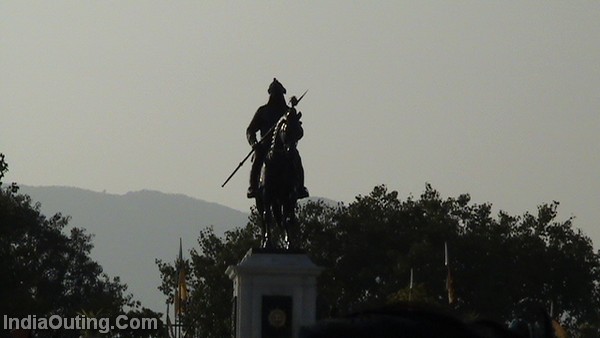
Atop the Moti Magri or Pearl Hill, overlooking the Fateh Sagar Lake is the memorial of the Rajput hero Maharana Pratap with a bronze statue of the Maharana astride his favourite horse “Chetak”. More details are available at Maharanapratap.net, a collection of facts and figures on Maharana Pratap and his life.

Sajjangarh Fort

The summer resort of the Maharajas is atop the hill overlooking all the lakes. This palace had a way to collect rain water for consumption all year around.

Udaipur

Udaipur

Sukhadia Circle

Sukhadia Circle (Square), Udaipur, a large roundabout in the city’s northern suburb of Panchwati, on the road to Ranakpur and Mt. Abu. The centrepiece of the Circle is a large, three-tiered fountain just over 21 m. high, with scalloped dishes surmounted by a wheat-ear motif, representing prosperity. Illuminated at night, it is now a well-known landmark. Its foundation was laid in 1968 and was opened in 1970. The Circle is a popular recreational centre and meeting place. A circular pond surrounds the fountain; nearby are pleasant gardens. Families and friends come together, especially at night, when music plays, and dozens of food, cold drinks and tea stalls do a flourishing trade. Children particularly enjoy the experience: they float toy boats in the central pond, where odd duck-shaped pedallos (paddle boats) vie for space; there is even a mini train nearby. Sukhadia Circle commemorates the memory of Udaipur’s MOHAN LAL SUKHADIA, one-time Chief Minister of Rajasthan and a native of Udaipur.

Jagdish Temple

A temple situated in the middle of the city - a big tourist attraction, the temple of Jagannath Rai, now called Jagdish-ji, is a major monument. It is raised on a tall terrace and was completed in 1651. It attaches a double storeyed Mandapa (hall) to a double - storied, saandhara (that having a covered ambulatory) sanctum. The mandapa has another storey tucked within its pyramidal samavarna (bell - roof) while the hollow clustered spire over the sanctum contains two more, non - functional stories. Lanes taking off from many of the sheharpanah (city wall) converge on the Jagdish Temple. It was built by Maharana Jagat Singh Ist in 1651 A.D. It is an example of Indo - Aryan architecture.

Udaipur

Fateh Sagar Lake

Fateh Sager Lake is a vicinity for young lovers, it is situated in the north of Lake Picholas. It was originally built by Maharana Jai Singh in the year 1678 AD, but later on reconstructed and extended by Maharana Fateh Singh, As lot of destruction was caused by heavy rains.In the year 1993-1994,the water vanished from the lake and again in the year 2005-2006, the lake regaind its water.The lake is tried directly to connect with mansivacal dam so that it doesnot suffer any type of water problem again in future.

Lake Pichola

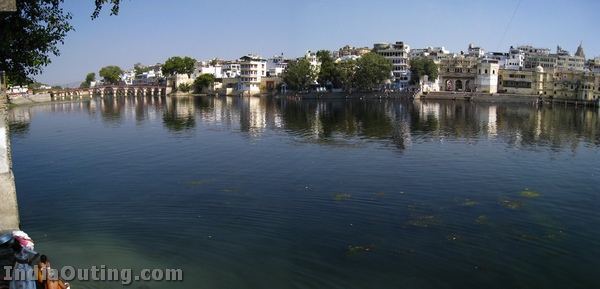
The Sapphire Udaipur : Lake Pichola is a lake that has two islands, Jag Niwas and the Jag Mandir. This lake is 4km long and 3 km wide, originally built by Maharana Udai Singh II after he discovered Rajasthan “Udaipur”. There are many ghats, like the bathing and washing ghats, which can be approached through boats from the City Palace of Udaipur (Bansi Ghat). In the heart of lake, the Lake Palace stands, which is now converted into a heritage palace hotel. This palace hotel is considered to be 3 decades old in the history of Udaipur. The Lake remains fairly shallow, at the time of heavy rains, and gets dry easily at the time of severe drought. A hermit is said to have advised the Maharana to establish his kingdom over Lake Pichola, after the fall of Chittaurgarh by Mughal emperor Akbar.

Udaipur Udaipur

Saheliyon-ki-Bari

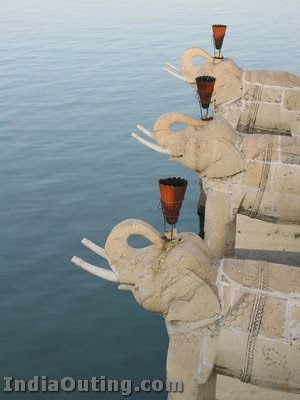
Sahelion Ki Bari’ was laid for a group of forty-eight young women attendants who accompanied a princess to Udaipur as part of her dowry. The gardens set below the embankment of the Fateh Sagar Lake have beautiful lotus pools, marble pavilions and elephant- shaped fountains. These fountains are fed by the water of the lake gushing through ducts made for the purpose. Each water channel has its distinct sound and the mingling of these sounds complement the ambience of the place.

Udaipur Solar Observatory

Asia’s only solar observatory, the Udaipur Solar Observatory is situated on an island in the middle of the Lake Fatehsagar and the main office building is located at its NW-shore near Bari Road - Rani Road Junction. The site is run under PRL (Physical Reaserch Lab) in Ahemdabad. The sky conditions at Udaipur are quite favourable for solar observations. The large water body surrounding the telescopes decreases the amount of heating of the surface layers. This decreases the turbulence in the air mass and thereby improves the image quality and seeing. The main objective of obtaining the high spatial and temporal resolution observations of solar photospheric and chromospheric.

Udaipur