Hotel Booking

Sunday, June 13, 2010

Africa World Cup opening ceremony 2010 images

Africa celebrates the continent's first ever World Cup with a burst of joy and colour... and lots of noise

By Mail Foreign Service

Last updated at 10:05 PM on 11th June 2010


The first World Cup ever held in Africa opened on Friday in a dazzling burst of joy, color and noise - and just a tinge of sadness.

Before a jubilant, horn-blowing crowd in Soccer City, the spectacular stadium between Johannesburg and Soweto, hundreds of African dancers in vivid greens, reds and yellows paraded onto the field for the opening ceremony of the month-long tournament.

Most of the fans were in the yellow jerseys of Bafana Bafana - the host country's team - which was playing Mexico following the pageantry.

world cup

An all-star cast of musicians, including South African trumpeter Hugh Masekela and American singer R. Kelley, performed

Africa World Cup opening ceremony 2010 images

A general view of atmosphere during the Opening Ceremony ahead of the 2010 FIFA World Cup South Africa Group A match between South Africa and Mexico


A giant replica dung beetle was the star attraction of the ceremony, watched by an estimated 500million people.

The creature – revered in South Africa because it nourishes the soil – led 1,000 dancers on to the pitch and showed off its dribbling skills.

But the elation was tempered by news that Nelson Mandela, the revered anti-apartheid leader and former South African president, would not attend the ceremony.

The 91-year-old Mandela is frail, and decided not to come after his 13-year-old great-granddaughter was killed in a car crash on the way home from Thursday night's World Cup concert.

The driver of the car in which she was travelling has now been charged with drink-driving and culpable homicide.

Several other icons of the anti-apartheid struggle in South Africa were on hand — including Mandela's former wife, Winnie, and Archbishop Desmond Tutu, who at one point was dancing in his seat to the music.

Former South Africa President F.W. De Klerk, who shared a Nobel Peace Prize with Mandela for negotiating an end to white-minority rule, also was present, organisers said.

Other VIPs included the presidents of South Africa and Mexico - Jacob Zuma and Felipe Calderon - and U.S. Vice President Joe Biden.

Africa World Cup opening ceremony 2010 images

Artists perform during the World Cup opening ceremony at Soccer City in Johannesburg

Africa World Cup opening ceremony 2010 images

Performers dance around a representation of the calabash cooking pot which inspired the design of Soccer City Stadium

Africa World Cup opening ceremony 2010 images

Dancers perform behind a giant beetle during the Opening Ceremony ahead of the South Africa versus Mexico

Africa World Cup opening ceremony 2010 images

A giant African beetle pushes a giant Jabulani ball during the opening ceremony


It was not an occasion for those who like it quiet. Many of the fans came equipped with vuvuzelas - the plastic horns which emit a loud and distinctive blare.

The trumpets made such a noise that free ear plugs were distributed outside the stadium to spectators.

Incredibly, the din from the horns was briefly drowned out by the overflight of military jets just before the ceremony started.

The public address announcer then begged the crowd to ease up on the horns so the global television audience could hear the music. The plea met with limited success.

An all-star cast of musicians, including South African trumpeter Hugh Masekela and American singer R. Kelley, performed. Cast members brought out large placards with the flags of the 32 nations competing in the tournament, holding them high as a final burst of fireworks ended the show.

Soccer City, which seats more than 90,000, wasn't yet full at the start of the ceremony. Thousands of fans were stuck in traffic jams on roads leading to the stadium - regaled along the way by groups of dancing, chanting young people in Bafana shirts and by vendors selling the multicolored South African flag.

Even the South African team coach was caught up in the traffic chaos - and was almost late for the opening game.

The match did not disappoint - South Africa took a surprise lead in the second half thanks to a spectacular goal by Siphiwe Tshabalal, but Mexico levelled things when Rafael Marquez hit the back of the net.

The South Africans could have snatched a late winner, but striker Katlego Mphela hit the post.

Last night's pre-tournament concert featured a host of international stars including Colombian pop star Shakira and US chart-toppers The Black Eyed Peas.

Africa World Cup opening ceremony 2010 images

South Africa fans show their support during the ceremony


South African president Jacob Zuma took to the stage and thanked South Africans for the welcome they have given World Cup fans, and called on them 'to show the warmness for the whole duration of the tournament.'

One English couple attended the ceremony and planned to stay on for the opening game between South Africa and Mexico was 30-year-old Paul Shannon who was with his American wife Shannon.

The pair, from Chelmsford, Essex, are on a short break in South Africa which will also see them attend today's game between England and the USA in Rustenburg some 80 miles north-west of Johannesburg.

Wisconsin born Shannon said that she would be cheering on the American team while husband Paul added: 'It has been a great trip so far and after watching the first England game we will be going down to Cape Town.

'However, I have told Shannon that if the USA beats England I will not be talking to her for the rest of the trip!'


Africa World Cup opening ceremony 2010 images

The FIFA 2010 Soccer World Cup kicks off with the opening match between hosts South Africa and Mexico

Africa World Cup opening ceremony 2010 images

A South Africa fan blows a Vuvuzela as she awaits the Opening Ceremony ahead of the 2010 FIFA World Cup South Africa Group A match

Africa World Cup opening ceremony 2010 images

South African dancers wearing colorful wigs perform at the Fan Zone in Rustenburg, South Africa

Artists perform during the World Cup opening ceremony

Jump: Artists perform during the World Cup opening ceremony

Africa World Cup opening ceremony 2010 images

Tens of thousands of South African fans flock to the Fan Fest to see their team's first match of the World Cup in Durban


Africa World Cup opening ceremony 2010 images

Several other icons of the anti-apartheid struggle in South Africa were on hand - including Mandela's former wife, Winnie, and Archbishop Desmond Tutu, who at one point was dancing in his seat to the music

world cup

Former South Africa President F.W. De Klerk, who shared a Nobel Peace Prize with Mandela for negotiating an end to white-minority rule, also was present, organisers said


Africa World Cup opening ceremony 2010 images

South Africa's Siphiwe Tshabalala scores his sides first goal of the game during the 2010 FIFA World Cup South Africa, Group A match


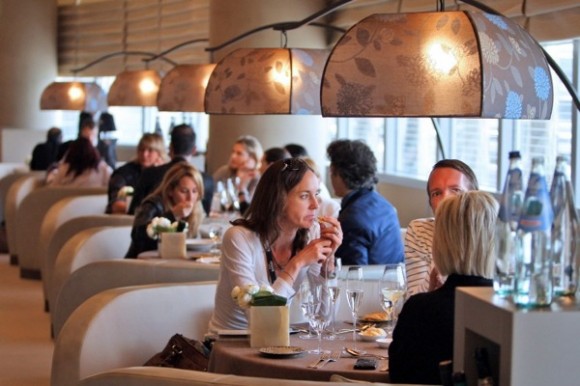
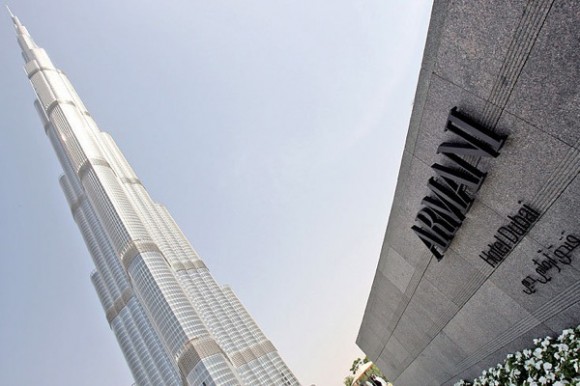
Armani's Hotel In Dubai..

Armani's Hotel In Dubai..


This is Armani hotel’s wallpapers, Armani hotel is biggest hotel in Dubai. There are world of minimalist elegance in each of the 160 guest rooms and suites at the Armani hotel in Dubai. You can take home part of the Armani life style experience with the carefully selected products from Giorgio Armani.

Armani's Hotel In Dubai..

Armani's Hotel In Dubai..

Armani's Hotel In Dubai..

Armani's Hotel In Dubai..

Armani's Hotel In Dubai..

Armani's Hotel In Dubai..

Armani's Hotel In Dubai..

Armani's Hotel In Dubai..

Armani's Hotel In Dubai..

Armani's Hotel In Dubai..


Friday, June 11, 2010

Most Weird Places on Earth

Most Weird Places on Earth


1. Aurora Borealis (North Pole)

Aurora Borealis

Image Source

Auroras sometimes called the northern and southern (polar) lights or aurorae are natural beautiful light displays in the sky, usually observed at night, particularly in the polar regions. They typically occur in the ionosphere. The Cree people call this phenomenon the “Dance of the Spirits. Its southern counterpart, the aurora australis or the southern polar lights, has similar properties, but is only visible from high southern latitudes in Antarctica, South America, or Australasia.

2. Spain Rio Tinto

Spain Rio Tinto

Image Source: Unknown

The vast mines of Rio Tinto give a hypnagogic, almost martian landscape. Its growth has consumed not only mountains and valleys but even entire villages. This river has gained recent scientific interest due to the presence of extremophile aerobic bacteria that dwell in the water.The extreme conditions in the river are analogous to other locations in the solar system thought to contain liquid water, such as subterranean Mars. Río Tinto is notable for being very acidic (pH 2) and its deep reddish hue. It is metal soluble and surely not human-friendly!

3. McMurdo Dry Valleys (Antarctica)

McMurdo Dry Valleys

Image Source: Unknown

The McMurdo Dry Valleys are a row of valleys in Antarctica located within Victoria Land west of McMurdo Sound. The terrain looks like something not of this Earth; The region includes many interesting geological features including Lake Vida and the Onyx River, Antarctica’s longest river. The valley’s floor occasionally contains a perennially frozen lake with ice several meters thick. It is also one of the world’s most extreme deserts Under the ice, in the extremely salty water, live mysterious simple organisms, a subject of on-going research. Scientists consider the Dry Valleys perhaps an important source of insights into possible extraterrestrial life.

4. The Richat Structure, near Ouadane, Mauritania

Richat Structure

Image Source

The Richat Structure is a prominent circular feature in the Sahara desert of Mauritania near Ouadane. It has attracted attention since the earliest space missions because it forms a conspicuous bull’s-eye in the otherwise rather featureless expanse of the desert. The structure, which has a diameter of almost 50 kilometres (30 miles), has become a landmark for space shuttle crews.

5. Rotorua, New Zealand

Rotorua

Image Source

Rotorua is a city on the southern shores of the lake of the same name, in the Bay of Plenty region of the North Island of New Zealand. Rotorua city is renowned for its unique “rotten eggs” aroma, which is caused by the geothermal activity releasing sulphur compounds into the atmosphere. Geothermal activity is at the heart of much of Rotorua’s tourist appeal. Geysers and bubbling mud-pools, hot thermal springs and the Buried Village (Te Wairoa) – are within easy reach of the city.This thermal activity owes itself to the Rotorua caldera on which the city lies. Waters of ivid colors, from yellow to orange to green which is partially possible to visit it.

6. Fly Geyser, Reno

Socotra Island

Image Source

Fly Ranch features two geysers, one of which is dormant. The other, Fly Geyser, was accidentally formed by a water well drill that hit a geothermal source, and continuously sprays hot water. Fly Ranch is private property and does not allow visitors.

7. Spotted Lake, Osoyoos, British Columbia

Spotted Lake

Image Source

Spotted Lake is a saline endorheic alkali lake located northwest of Osoyoos in British Columbia. In the summer, most of the water in the lake evaporates leaving behind all the minerals. Large “spots” on the lake appear and depending on the mineral composition at the time, the spots will be different colors. The spots are made mainly of magnesium sulfate, which crystallizes in the summer. Since in the summer, only the minerals in the lake remain, they harden to form natural “walkways” around and between the spots.

8. The Bermuda Triangle

Bermuda Triangle

Image Source

The Bermuda Triangle, also known as the Devil’s Triangle, is a region in the western part of the North Atlantic Ocean in which a number of aircraft and surface vessels are alleged to have mysteriously disappeared in a manner that cannot be explained by human error, piracy, equipment failure, or natural disasters. Popular culture has attributed these disappearances to the paranormal, a suspension of the laws of physics, or activity by extraterrestrial beings. Apparently it doesn’t seem alien but it is really scary!

9. Kauai, Hawaii

Kauai, Hawaii

Image Source

Kauaʻi is the oldest of the main Hawaiian Islands, it is the fourth largest of the main islands. Seaside lava ledges make for otherworldly experiences on this often-overlooked Hawaiian island.

10. Mount Roraima (Venezuela, Brazil and Guyana)

Mount Roraima

Image Source

Since long before the arrival of European explorers, the mountain has held a special significance for the indigenous people of the region, and it is central to many of their myths and legends It is a pretty remarkable place. It is a tabletop mountain with sheer 400-metre high cliffs on all sides. There is only one ‘easy’ way up, on a natural staircase-like ramp on the Venezuelan side – to get up any other way takes and experienced rock climber. On the top of the mountain it rains almost every day, washing away most of the nutrients for plants to grow and creating a unique landscape on the bare sandstone surface.

Amazing Floating Village Of Lake Titicaca

Amazing Floating Village Of Lake Titicaca

Imagine waking up and then see the world float past our window, what the disaster is happening? a tidal wave or storm nightmare was hit our house? Or is this just an ordinary day in the bed of grass floating on the lake Titicaca. Located at an altitude of 3812 meters in the Peruvian desert, here there are 40 floating islands. Originally created by the Uros people of Peru from Inca times, beautiful islands are used for refuge and shelter from the war that never stopped in their homeland. Uros tribe, this way, can really make difficult to be reached by the aggressor, and because it worked so well for their society for centuries, there seems no reason to move to the mainland.


Made with carefully hand, this floating village composed of layers of thatch grass tortora who put together and tied to a floating base structure, such as pontoons. The result is like a giant raft, and great to be able to withstand heavy loads and large.


These islands are actually quite advanced and could be forced to be burdened but also must be repaired on a regular basis to maintain its strength. When the grass-thatched old started regardless of basic structure, weeds, new weeds replace the surface. Thatch grass are taken carefully from the edge of Lake Titicaca. These islands moored in place with ropes tied to wooden poles to the bottom of the lake.


Only a few of the islands would receive visitors, which does not mean it is not good because there are reports mentioning the Uros tribe living tradition is changing rapidly due to increasing their interaction with the tourists. The inhabitants of this lake sees himself as protector of the lake and is said ahead of a pre-Incan civilization, and according to legend from generation to generation, even existed before the sun, stars and moon. No wonder they fear will pestered by people who want to know much about them.


Lotus Lake, Taiwan

Lotus Lake, Taiwan

Please wait images are loading .....

Lotus Lake (è“®æ± æ½­) is a man-made lake and popular tourist destination on the east side of Tsoying District in Kaohsiung City in southern Taiwan. Opened in 1951, it is famous for the lotus plants on the lake and the numerous temples around the lake, including the Spring and Autumn Pavilions (春秋閣), the Dragon and Tiger Pagodas (é¾�虎塔), and the Confucian Temple (孔廟).
Lotus Lake was the site for several water sporting events for World Games 2009, including canoe polo, water ski, and dragon boat.

Lotus Lake, Taiwan

Lotus Lake, Taiwan

Lotus Lake, Taiwan

Lotus Lake, Taiwan

Lotus Lake, Taiwan

Lotus Lake, Taiwan

Lotus Lake, Taiwan

Lotus Lake, Taiwan

Lotus Lake, Taiwan